Hall of the hand · Sanctuary-owned, plus fan-shared references
Signature Collection
These cases hold objects the Sanctuary has received with Mariah Carey’s hand on them — vinyl, photographs, booklets, and keepsakes shared from our own archive. Each piece in this hall is drawn from Sanctuary Instagram posts whose captions mark the object as signed or autographed.
Nothing in this hall is for sale.
The cases
Objects the Sanctuary has already shared as signed
Only Sanctuary Instagram posts whose captions say “signed,” “autographed,” or a close variant appear here. This is not a marketplace, not a price list, and never a place for other people’s listings. No object is generated to fill a case.
The signed cases are being prepared…
Further in · the field reference
Not everything in this hall is Sanctuary property.
The field reference also draws on real signatures shared publicly by fellow Lambs — reference examples the Sanctuary does not own, included so collectors can compare a listing against the real thing. Each is captioned and credited as such.
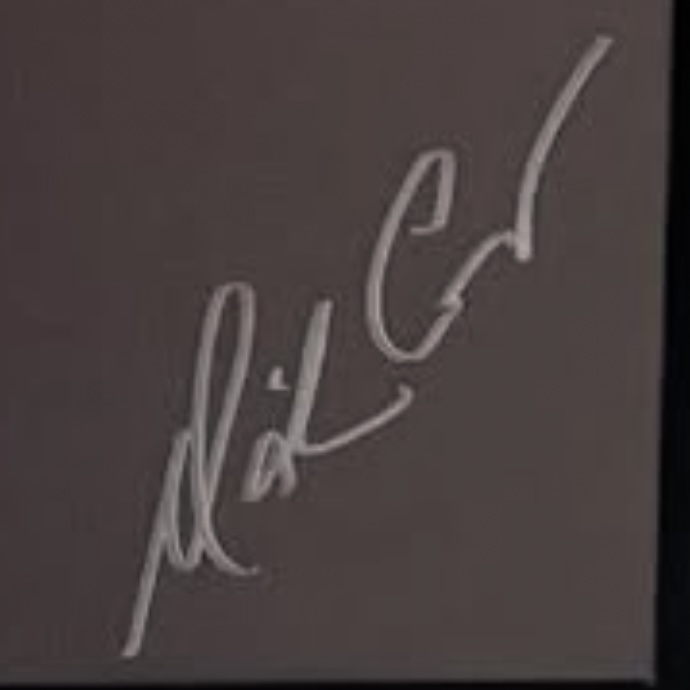
Fig. EFan-shared reference
Isolated modern slash
- Object
- Signature close-up
- Ink
- marker
- Surface
- coated stock
Photograph credit: Lambily
Fig. E in the field reference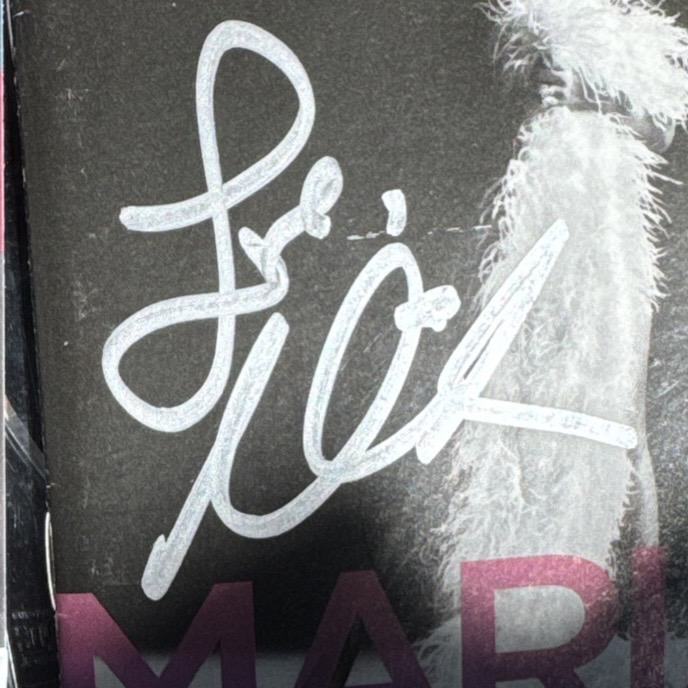
Fig. MFan-shared reference
Love and name together, large surface
- Object
- Signed album cover
- Ink
- marker
- Surface
- printed sleeve
Photograph credit: Lambily
Fig. M in the field reference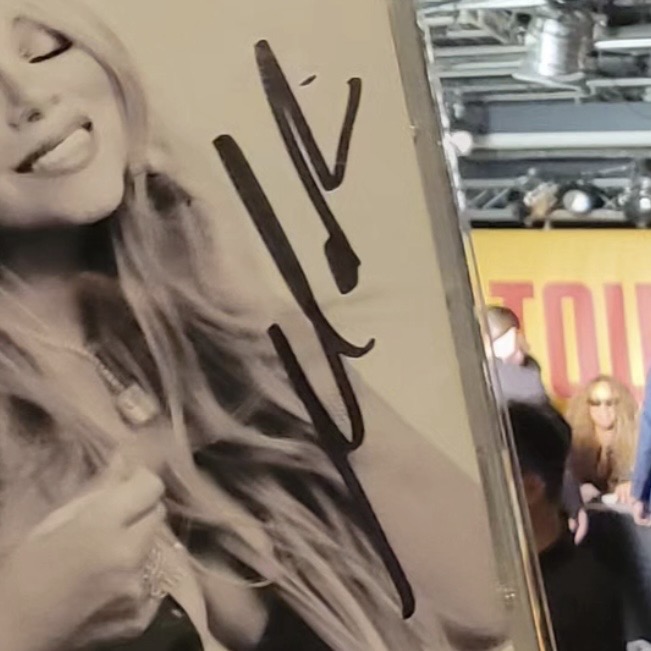
Fig. NFan-shared reference
Signed in person
- Object
- Signed photograph
- Ink
- marker
- Surface
- photographic print, sepia tone
Photograph credit: Lambily
Fig. N in the field reference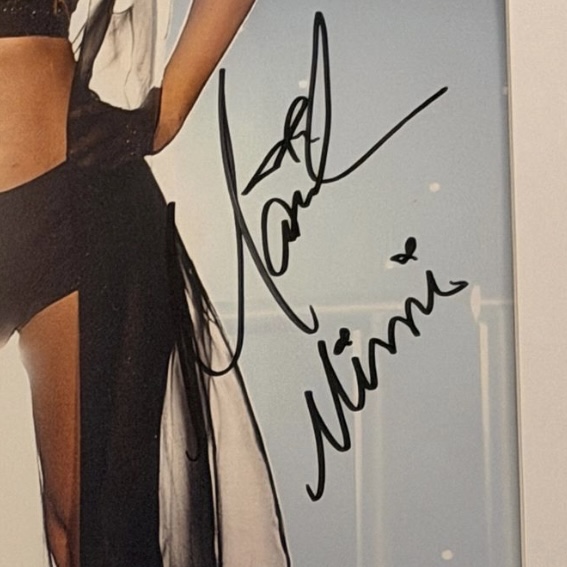
Fig. OFan-shared reference
Two units, signed together
- Object
- Framed photograph
- Ink
- marker
- Surface
- photographic print
Photograph credit: Lambily
Fig. O in the field reference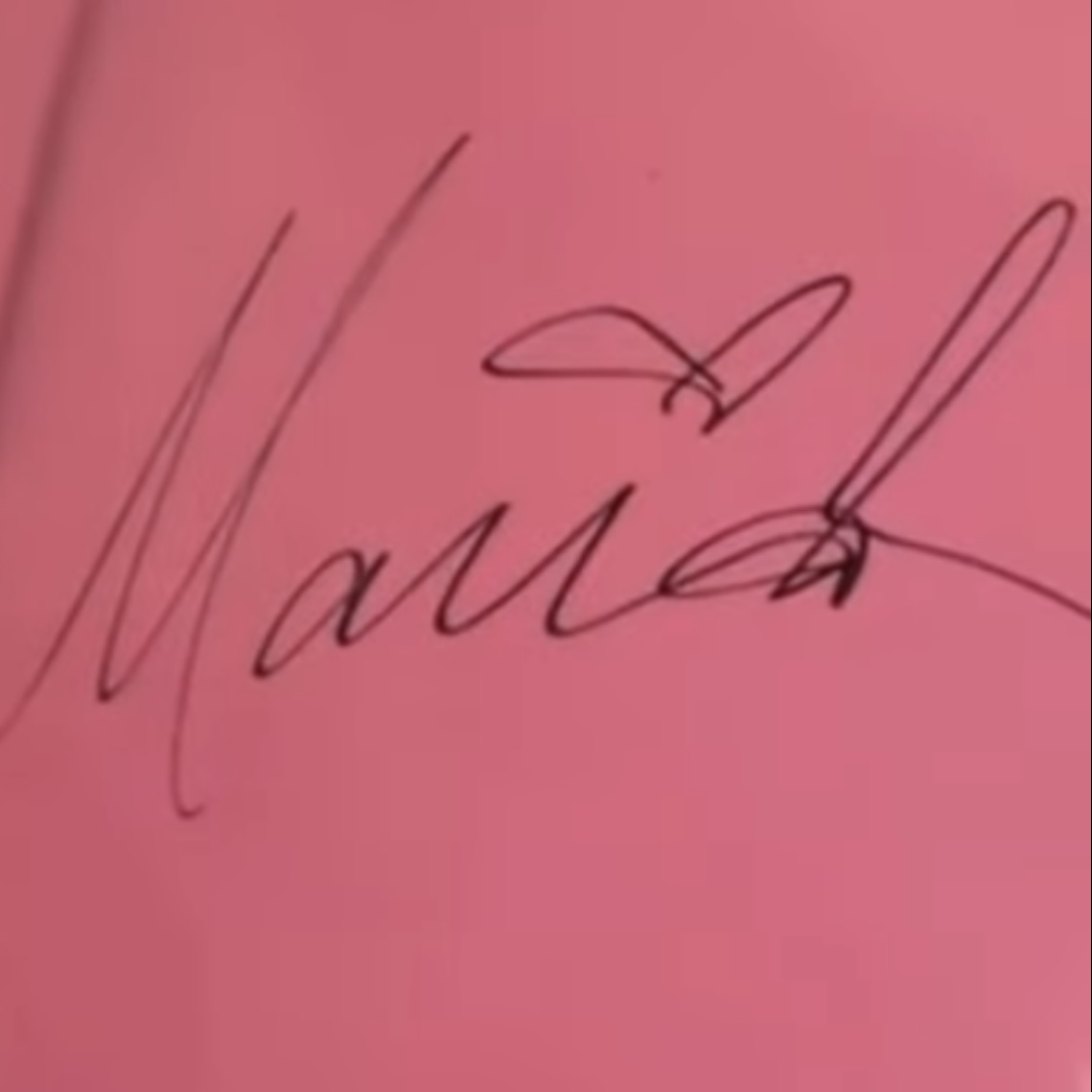
Fig. PFan-shared reference
A fuller, legible form
- Object
- Signed card
- Ink
- dark marker
- Surface
- light-colored stock
Photograph credit: Lambily
Fig. P in the field reference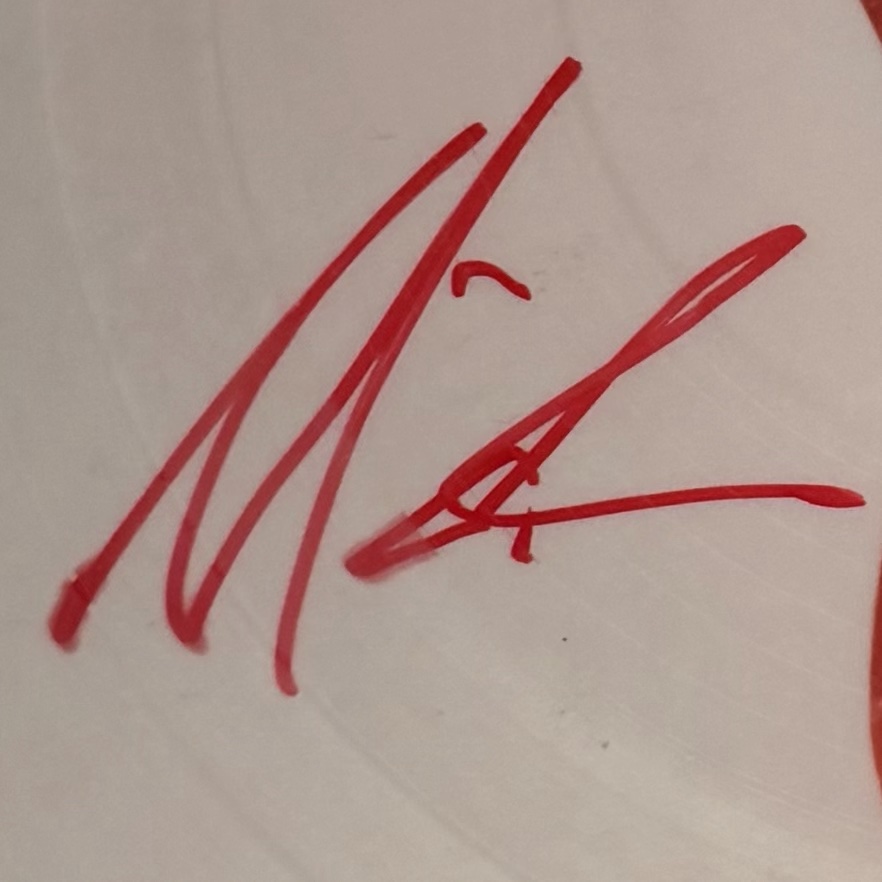
Fig. QFan-shared reference
Red marker on vinyl
- Object
- Signed picture disc (vinyl)
- Ink
- red marker
- Surface
- lacquered surface
Photograph credit: Lambily
Fig. Q in the field reference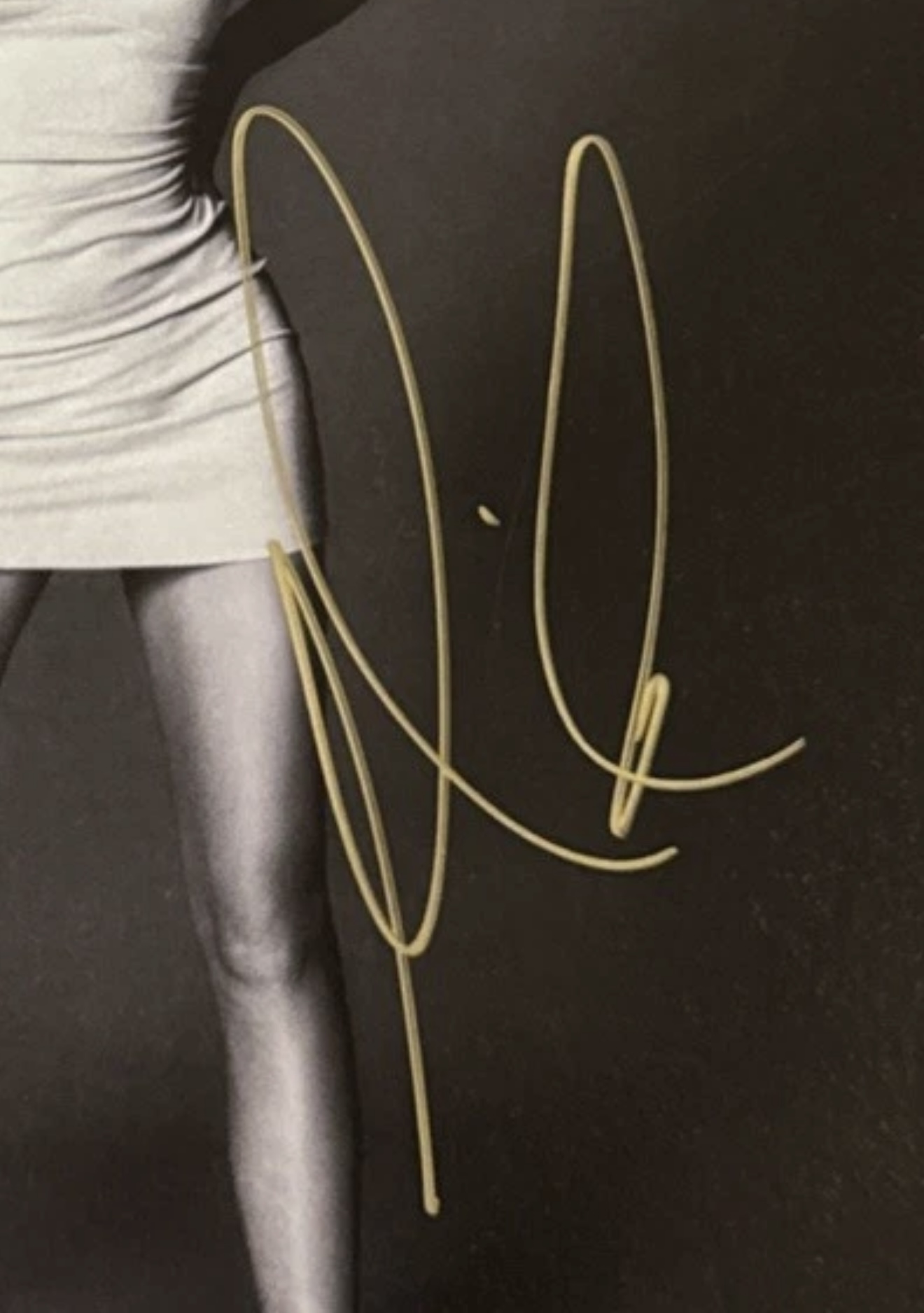
Fig. RFan-shared reference
Metallic marker on a printed photograph
- Object
- Signed photograph
- Ink
- gold or metallic marker
- Surface
- photographic print
Photograph credit: Lambily
Fig. R in the field reference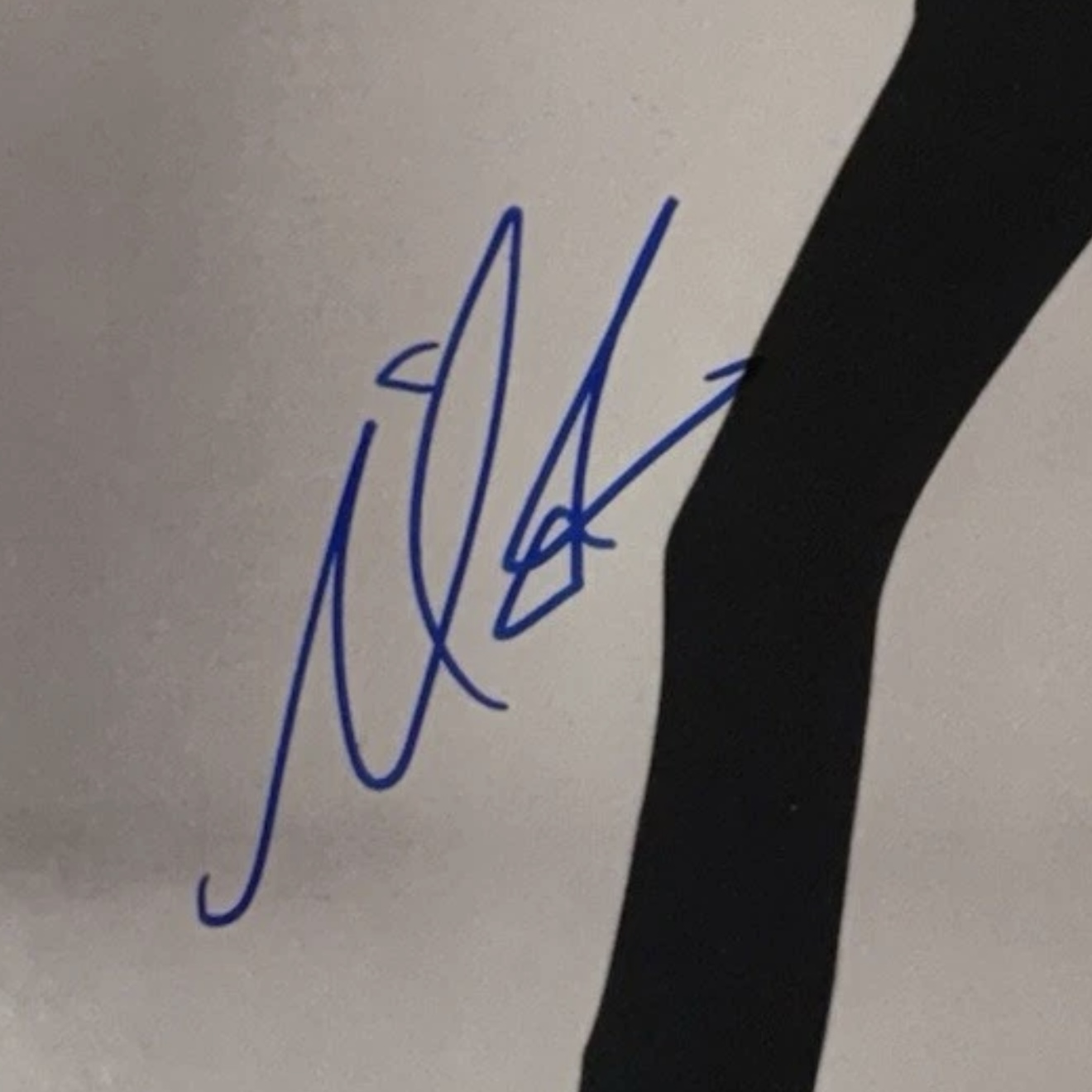
Fig. SFan-shared reference
Blue dye marker on a printed photograph
- Object
- Signed photograph
- Ink
- blue dye marker
- Surface
- coated photographic stock
Photograph credit: Lambily
Fig. S in the field reference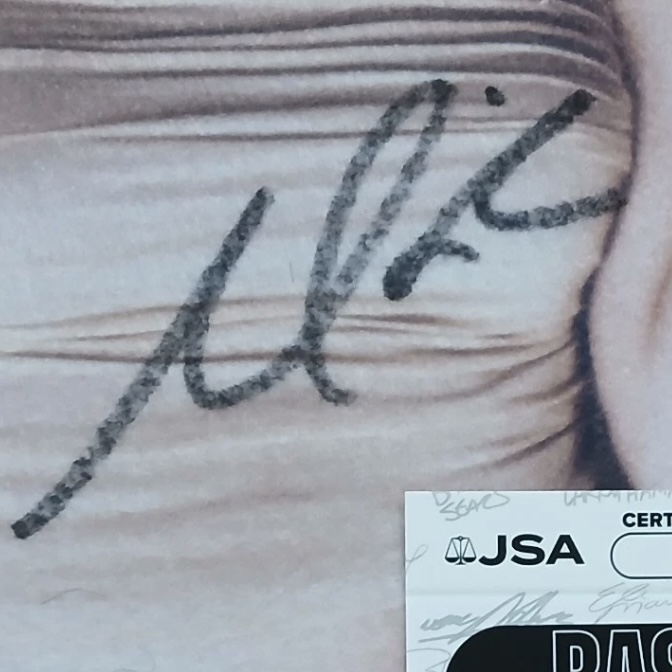
Fig. TFan-shared reference
A JSA card in the frame
- Object
- Signed photograph, framed with a JSA card
- Ink
- marker
- Surface
- photographic print
Photograph credit: Lambily
Fig. T in the field reference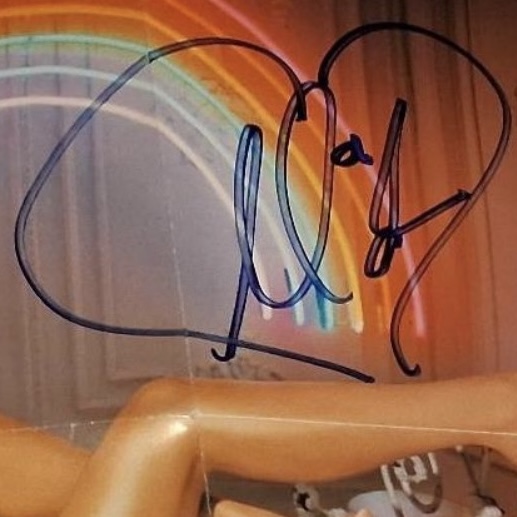
Fig. UFan-shared reference
Signed photograph, rainbow motif in the print
- Object
- Signed photograph
- Ink
- dark marker
- Surface
- photographic print with a rainbow-hued backdrop
Photograph credit: Lambily
Fig. U in the field reference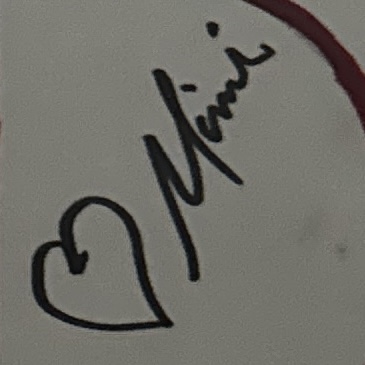
Fig. VFan-shared reference
Mimi, with a heart
- Object
- Signed card
- Ink
- dark marker
- Surface
- light stock
Photograph credit: Lambily
Fig. V in the field reference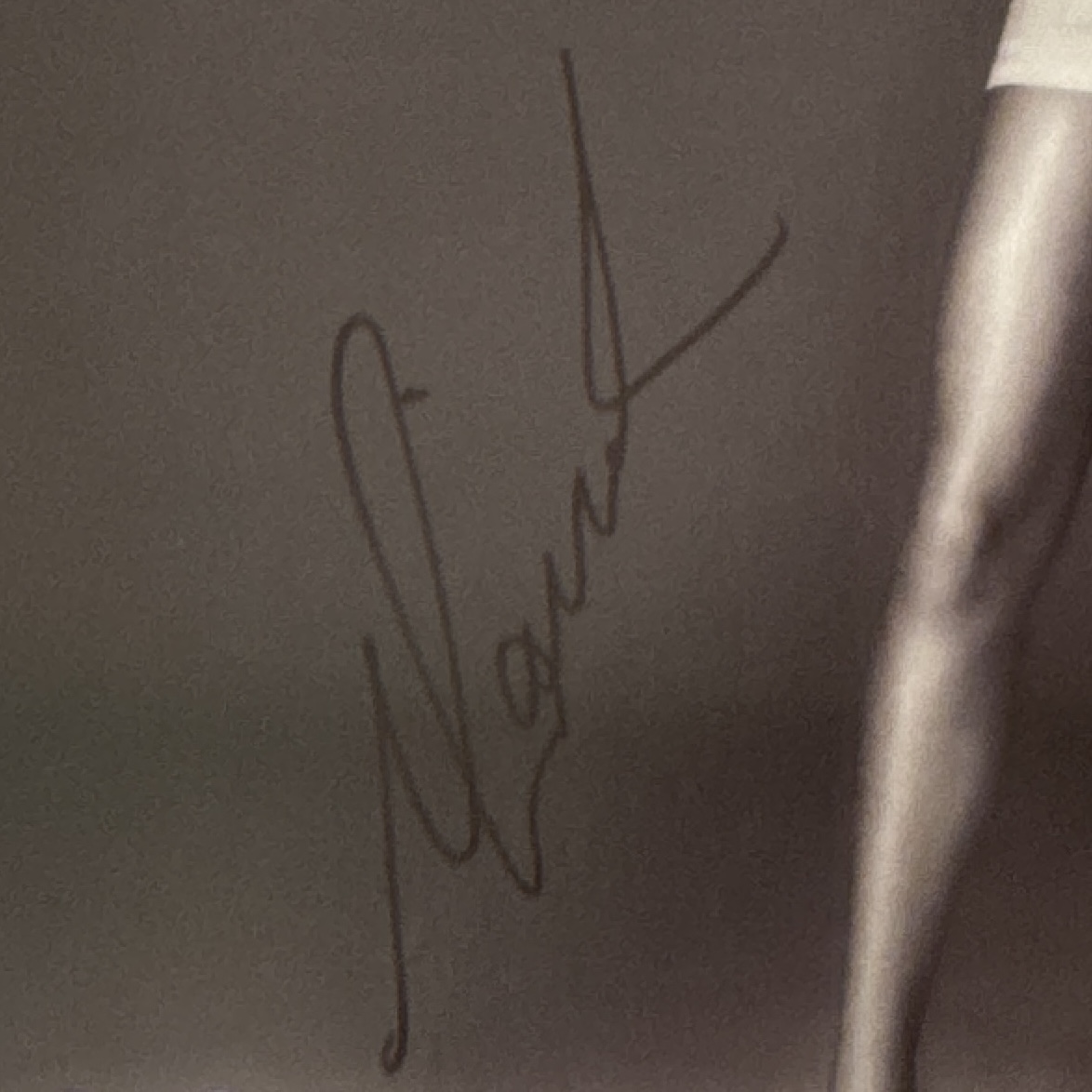
Fig. WFan-shared reference
Signature on a printed photograph
- Object
- Signed photographs
- Ink
- dark marker
- Surface
- photographic prints
Photograph credit: Lambily
Fig. W in the field reference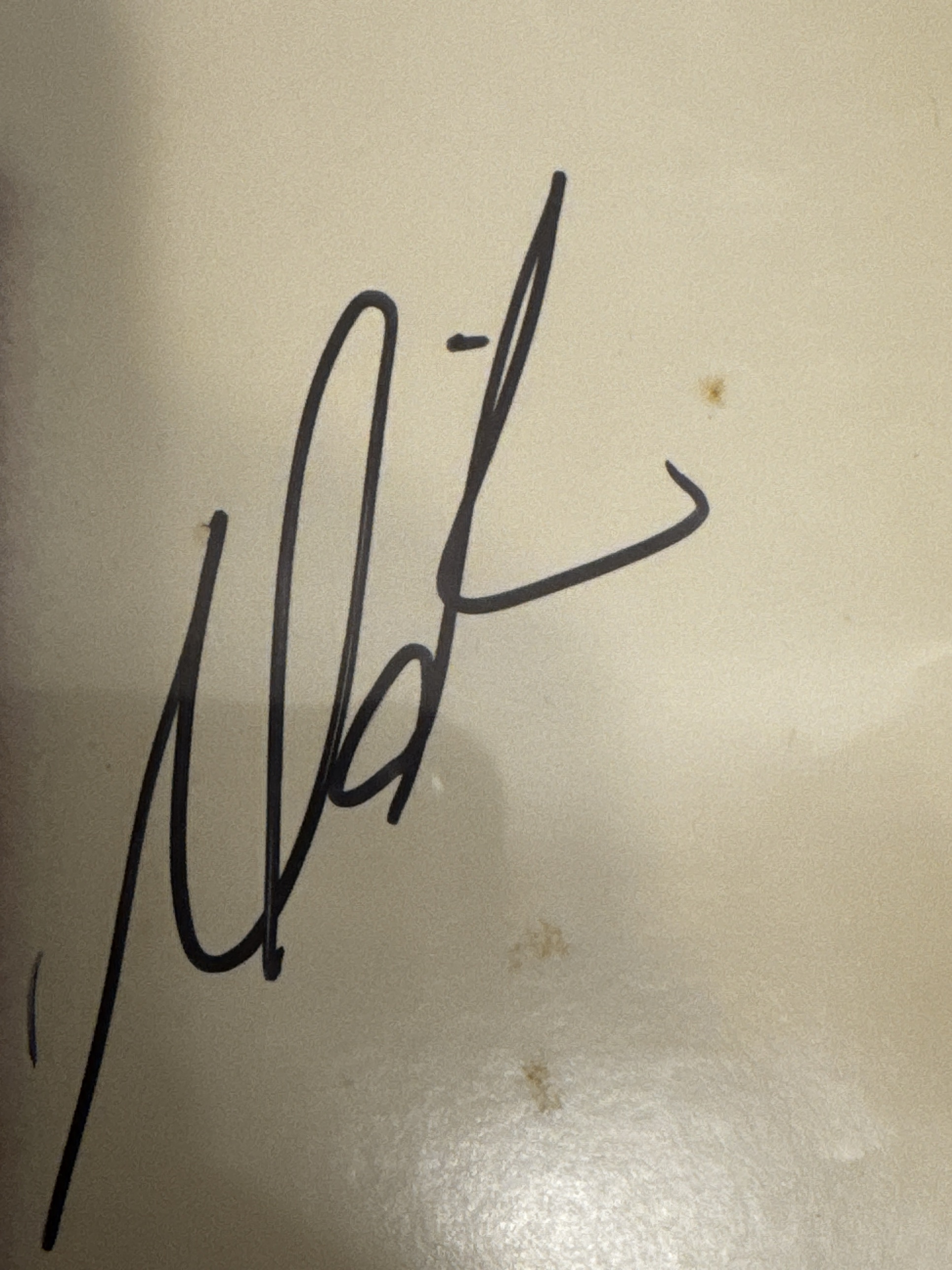
Fig. XFan-shared reference
Signature on a glossy surface
- Object
- Signed glossy prints
- Ink
- dark marker
- Surface
- pending
Photograph credit: Lambily
Fig. X in the field reference
13 objects · swipe, scroll sideways or use the arrow keys
A signature is not décor. It is time. Mariah has, for decades, stopped for as many people as the night would allow: a booklet on a table, a picture disc under a Christmas light, a photograph passed across a barrier. She writes quickly because the line is long. She writes anyway. That generosity is part of the object. It is not a bonus sticker.
Field reference · on this wall
Reading a Mariah Carey Signature: A Field Reference
A screening guide for collectors. Published by the Mariah Sanctuary Foundation. Last revised September 2026.
Includes stroke mechanics, substrate, pens, mechanical reproduction, provenance, named limits, sources, and the photograph plates.
Where the evidence is strong, the Sanctuary says so. Where it runs out, it says that too. A reference that hides its limits is worse than no reference. Nothing here substitutes for third-party authentication.
Architecture of the modern signature
It is not “Mariah Carey” written quickly. It is a two-part construction.
- Inscription — usually “Love,” sometimes omitted for space. The L opens with a tall, narrow ascender loop leaning right. The downstroke plunges below the baseline and forms a large lower loop sweeping left before recovering. Then “ove” is very small relative to the L (commonly around a third of its height), tightly compressed, finishing in a rising comma or flick. A separate dot often sits above and to the right of that terminal.
- Name — abbreviated, not spelled out. Do not try to read individual letters. Required components: a tall thin ascender that peaks at a sharp point, not a rounded arc; a triangular or A-shaped element with a crossbar in the upper middle; a long trailing exit stroke sweeping right, nearly horizontal, tapering to a point; often a deep descender dropping below the baseline on the left.
Overall: the inscription rises left to right on a consistent diagonal with a strong rightward lean. On a generous surface the two elements separate (inscription upper left, name lower right). The name’s footprint is roughly two and a half to three times wider than it is tall.
The most useful habit: stop reading it as handwriting and start reading it as a shape with required components. Is the trailing exit stroke there? Are the peaks pointed or rounded? Does the whole thing lean right?
The four Tier One tells
- Missing trailing exit stroke on the abbreviated name — the most consistently absent feature on failed items examined for this guide.
- Rounded loops where the genuine form has sharp pointed peaks. Broad tips soften peaks; they do not convert them into loops.
- Upright or vertical axis instead of the pronounced rightward lean.
- Inscription proportions wrong — “ove” too large relative to the L.
1992 to 1999: undocumented
No dated, certified examples from this window were located. Any claim about how the signature looked in those years — including any claim on this website — is unsupported unless a certified, dated example is attached. This is the least documented period and the most exploited: a modern form on a cheap period item plus a borrowed in-person story. Always ask when, specifically. “Signed way back” is a refusal to answer.
Before you buy
- Ask for a straight-on, in-focus photograph of the signature under normal light, out of any sleeve or case.
- Ask specifically when it was signed. Vague answers are answers.
- Check Tier One: exit stroke, pointed peaks, rightward lean, inscription proportions.
- Confirm the signature appears consistently across at least two differently lit photographs.
- Establish the unsigned value of the object. That number anchors everything else.
- If there is no third-party certification, treat the price as speculative and offer accordingly.
- Check whether the seller has volume signed inventory. If so, cap your confidence.
- For anything above a modest sum, pay for a signature review before buying rather than after.
Authenticated signatures · cited register
Certified examples, on the record
JSA, PSA/DNA, and Beckett-certified items as catalogued elsewhere. Links, not copies.
What this register is: a reading list of Mariah Carey signed objects that a major third-party authenticator has certified, as recorded by auction houses, dealers, and marketplaces. It exists so that a collector can see what certified examples look like in the wild, on what objects, in what inks, before spending money.
What it is not: an endorsement of any seller, a price guide, or a claim by the Sanctuary. The Sanctuary has not examined any of these objects and sells nothing. Listings change, sell, and close; some of these links will expire.
- A certificate number is printed here only when the listing itself prints it. Every other row says “not transcribed” rather than guessing.
- A number on a listing is a claim until it resolves on the authenticator’s own site and describes the object in front of you. Use the verify link on each row.
- “Object date” is when the album, single, or issue was released. It is never a signing date. “Signing date, as stated” records only what the source says, and who said it — an era in a seller’s title is the seller’s claim, not the authenticator’s.
- The counterintuitive rule from the field reference applies here: a signature that closely matches a widely circulated certified example is not reassurance on its own.
Register compiled 18 September 2026. Corrections and additions welcome.
James Spence Authentication 15 cited
Signed 8×10 photograph
- Format
- Photograph
- Object date
- Not stated
- Signing date, as stated
- Not stated
- JSA certificate
- AK43824Number appears in the listing.
Self-titled debut album, signed vinyl LP
- Format
- Vinyl LP
- Object date
- 1990 (album release)
- Signing date, as stated
- Not stated
- JSA certificate
- CB07529Number appears in the listing.
Daydream, signed vinyl record
- Format
- Vinyl LP
- Object date
- 1995 (album release)
- Signing date, as stated
- Not stated
- JSA certificate
- CI14548Number appears in the listing title.
Daydream, signed vinyl record
- Format
- Vinyl LP
- Object date
- 1995 (album release)
- Signing date, as stated
- Not stated
- JSA certificate
- CI14544Number appears in the listing title. A sibling number to CI14548 above — consistent with a batch submission.
HollywoodMemorabilia.com ↗Verify at JSA official verification ↗
Daydream, signed insert, framed
- Format
- CD/LP insert, framed
- Object date
- 1995 (album release)
- Signing date, as stated
- Not stated
- JSA certificate
- Not transcribedCatalogued as “JSA Cert.”; number not transcribed from the catalogue.
Finarte, Milan — Pop Culture e Memorabilia ↗Verify at JSA official verification ↗Auction dated 19 February 2026
Maxim magazine, issue #69, hand-signed cover
- Format
- Magazine · Blue felt tip (as catalogued)
- Object date
- September 2003 (issue date)
- Signing date, as stated
- Not stated
- JSA certificate
- Not transcribedJSA hologram and matching COA per catalogue; number not transcribed.
39-inch Stratocaster-style electric guitar, signed on the pickguard
- Format
- Guitar
- Object date
- Not stated
- Signing date, as stated
- Not stated
- JSA certificate
- Not transcribedJSA hologram and matching COA per catalogue; number not transcribed.
Guitars are commonly signed at organised signings rather than in a fan line; treat provenance separately from the signature.
Full-size custom Fender electric guitar, signed
- Format
- Guitar
- Object date
- Not stated
- Signing date, as stated
- Not stated
- JSA certificate
- Not transcribedJSA COA per listing; number not transcribed.
eBay (Germany) listing ↗Verify at JSA official verification ↗
Rainbow, signed CD
- Format
- CD
- Object date
- 1999 (album release)
- Signing date, as stated
- Not stated
- JSA certificate
- Not transcribedJSA COA per listing; number not transcribed.
Signed 8×10 photograph, described by the seller as a “Rainbow era full name autograph”
- Format
- Photograph
- Object date
- Rainbow era would be circa 1999–2000 (seller’s description)
- Signing date, as stated
- “Rainbow era” — seller’s claim, not the authenticator’s
- JSA certificate
- Not transcribedJSA COA per listing; number not transcribed.
An era claim in a listing title is a seller statement. The field reference treats circa-2000 form as not established; screen the photograph, not the title.
#1 to Infinity, signed vinyl LP
- Format
- Vinyl LP
- Object date
- 2015 (compilation release)
- Signing date, as stated
- Not stated
- JSA certificate
- Not transcribedJSA per listing; number not transcribed.
I Still Believe, signed vinyl single
- Format
- Vinyl single
- Object date
- 1998–99 (single release)
- Signing date, as stated
- Not stated
- JSA certificate
- Not transcribedJSA per listing; number not transcribed.
Here for It All, signed CD
- Format
- CD
- Object date
- 2025 (album release)
- Signing date, as stated
- Not stated. Signed copies of this album were sold through the official store in 2025; an official-drop signature would be recent by definition.
- JSA certificate
- Not transcribedJSA COA per listing; number not transcribed.
Mercari listing ↗Verify at JSA official verification ↗Listed November 2025
Signed vinyl picture disc
- Format
- Vinyl picture disc
- Object date
- Not stated
- Signing date, as stated
- Not stated
- JSA certificate
- Not transcribedJSA per listing; number not transcribed.
Signed 12-inch remix vinyl
- Format
- Vinyl 12-inch
- Object date
- Not stated
- Signing date, as stated
- Not stated
- JSA certificate
- Not transcribedJSA per listing; number not transcribed.
PSA/DNA 16 cited
Honey, signed on the front cover
- Format
- Album / single sleeve · Blue felt tip (as catalogued)
- Object date
- 1997 (single release)
- Signing date, as stated
- Not stated
- PSA/DNA certificate
- Not transcribedCatalogued with a full letter of authenticity from PSA/DNA; number not transcribed.
Self-titled debut LP, signed
- Format
- Vinyl LP · Blue felt tip (as catalogued)
- Object date
- 1990 (album release)
- Signing date, as stated
- Not stated
- PSA/DNA certificate
- Not transcribedCatalogued with a PSA/DNA label; number not transcribed.
One of the lots the field reference relies on for the debut-era blue felt tip pairing.
Signed 8×10 photograph, framed
- Format
- Photograph, framed
- Object date
- Not stated
- Signing date, as stated
- Not stated
- PSA/DNA certificate
- AM88704Number appears in the listing title.
Amazon marketplace listing ↗Verify at PSA official cert verification ↗
Butterfly, signed vinyl LP
- Format
- Vinyl LP
- Object date
- 1997 (album release)
- Signing date, as stated
- Not stated
- PSA/DNA certificate
- AN90395Number appears in the listing title.
eBay (Germany) listing ↗Verify at PSA official cert verification ↗
Signed 8×10 colour photograph
- Format
- Photograph
- Object date
- Not stated
- Signing date, as stated
- Not stated
- PSA/DNA certificate
- Not transcribedPSA/DNA per catalogue; number not transcribed.
Merry Christmas, signed album cover
- Format
- Album cover
- Object date
- 1994 (album release)
- Signing date, as stated
- Not stated
- PSA/DNA certificate
- Not transcribedPSA/DNA per catalogue; number not transcribed.
Merry Christmas, signed vinyl album cover (record not included)
- Format
- Album cover
- Object date
- 1994 (album release)
- Signing date, as stated
- Not stated
- PSA/DNA certificate
- Not transcribedPSA/DNA hologram and matching COA per catalogue; number not transcribed.
Pristine Auction ↗Verify at PSA official cert verification ↗
Signed 8×10 photograph
- Format
- Photograph
- Object date
- Not stated
- Signing date, as stated
- Not stated
- PSA/DNA certificate
- Not transcribedPSA/DNA per lot title; number not transcribed.
Signed 8×10 photograph
- Format
- Photograph
- Object date
- Not stated
- Signing date, as stated
- Not stated
- PSA/DNA certificate
- Not transcribedPSA/DNA per lot title; number not transcribed.
Signed 8×10 publicity photograph
- Format
- Photograph
- Object date
- Not stated
- Signing date, as stated
- Not stated
- PSA/DNA certificate
- Not transcribedPSA/DNA per lot title; number not transcribed.
Signed 8×10 photograph, PSA/DNA autograph grade 10
- Format
- Photograph
- Object date
- Not stated
- Signing date, as stated
- Not stated
- PSA/DNA certificate
- Not transcribedPSA/DNA per listing; number not transcribed. A grade describes the signature’s condition and boldness, not its date.
Signed 16×20 photograph, framed
- Format
- Photograph, framed
- Object date
- Not stated
- Signing date, as stated
- Not stated
- PSA/DNA certificate
- Not transcribedPSA/DNA per listing; number not transcribed.
Daydream, signed
- Format
- Album (format per listing)
- Object date
- 1995 (album release)
- Signing date, as stated
- Not stated
- PSA/DNA certificate
- Not transcribedPSA/DNA per listing; number not transcribed.
Signed 8×10 photograph, described by the seller as a “full signature, Emotions” era
- Format
- Photograph
- Object date
- Emotions era would be 1991 (seller’s description)
- Signing date, as stated
- “Emotions” era — seller’s claim, not the authenticator’s
- PSA/DNA certificate
- Not transcribedPSA COA per listing; number not transcribed.
If genuinely 1991, a full, legible surname would be consistent with the documented 1990–91 form. That consistency is checked on the photograph, not assumed from the title.
Guitar pickguard, signed
- Format
- Pickguard
- Object date
- Not stated
- Signing date, as stated
- Not stated
- PSA/DNA certificate
- Not transcribedPSA per listing; number not transcribed.
eBay (Germany) listing ↗Verify at PSA official cert verification ↗
PSA AutographFacts — Mariah Carey signer page (exemplar images and notes maintained by PSA)
- Format
- Reference resource
- Object date
- Not stated
- Signing date, as stated
- Not applicable
- PSA/DNA certificate
- Not transcribedNot a certified object; a reference page. Consult it on PSA’s site — the Sanctuary does not reproduce its images.
PSA AutographFacts ↗Verify at PSA official cert verification ↗
Beckett Authentication Services 13 cited
Funko Pop! #382 “Mimi”, signed
- Format
- Vinyl figure / box
- Object date
- Not stated
- Signing date, as stated
- Not stated
- Beckett / BAS certificate
- BM58799Number appears in the listing.
eBay listing ↗Verify at Beckett official certificate verification ↗
Funko Pop! #85 “Merry Christmas”, signed
- Format
- Vinyl figure / box
- Object date
- Not stated
- Signing date, as stated
- Not stated
- Beckett / BAS certificate
- BQ48377Number appears in the listing.
eBay listing ↗Verify at Beckett official certificate verification ↗
Anytime You Need a Friend, signed vinyl album cover
- Format
- Album cover
- Object date
- 1994 (single release)
- Signing date, as stated
- Not stated
- Beckett / BAS certificate
- Not transcribedBAS serially numbered hologram per catalogue; number not transcribed. The catalogue page indicates the auction was cancelled.
Pristine Auction ↗Verify at Beckett official certificate verification ↗
Daydream, signed vinyl LP
- Format
- Vinyl LP
- Object date
- 1995 (album release)
- Signing date, as stated
- Not stated
- Beckett / BAS certificate
- Not transcribedBAS per listing; number not transcribed.
HollywoodMemorabilia.com ↗Verify at Beckett official certificate verification ↗
Self-titled debut, signed vinyl LP
- Format
- Vinyl LP
- Object date
- 1990 (album release)
- Signing date, as stated
- Not stated
- Beckett / BAS certificate
- Not transcribedBAS per listing; number not transcribed.
A 1990 object does not make the signature 1990. Ask when it was signed; a modern form on the debut is coherent only with a later signing.
HollywoodMemorabilia.com ↗Verify at Beckett official certificate verification ↗
Daydream, signed vinyl LP
- Format
- Vinyl LP
- Object date
- 1995 (album release)
- Signing date, as stated
- Not stated
- Beckett / BAS certificate
- Not transcribedBeckett COA per listing; number not transcribed.
Autographia ↗Verify at Beckett official certificate verification ↗
Butterfly, gold-coloured vinyl LP, signed
- Format
- Vinyl LP (coloured reissue)
- Object date
- 1997 album; coloured reissue pressing is later
- Signing date, as stated
- Not stated
- Beckett / BAS certificate
- Not transcribedBeckett COA per listing; number not transcribed.
eBay listing ↗Verify at Beckett official certificate verification ↗
Signed 11×14 photograph
- Format
- Photograph
- Object date
- Not stated
- Signing date, as stated
- Not stated
- Beckett / BAS certificate
- Not transcribedBeckett BAS COA per listing; number not transcribed.
World of Autographs ↗Verify at Beckett official certificate verification ↗
“Fantasy” lyric sheet, signed
- Format
- Lyric sheet
- Object date
- Song released 1995
- Signing date, as stated
- Not stated
- Beckett / BAS certificate
- Not transcribedBeckett BAS per listing; number not transcribed.
A signed lyric sheet is a different object class from a signed release. Check whether the lyrics are handwritten or printed before pricing the signature.
eBay (Germany) listing ↗Verify at Beckett official certificate verification ↗
Here for It All, exclusive signed CD, framed
- Format
- CD, framed
- Object date
- 2025 (album release)
- Signing date, as stated
- Not stated. Signed copies of this album were sold through the official store in 2025.
- Beckett / BAS certificate
- Not transcribedBeckett COA per listing; number not transcribed.
eBay (Germany) listing ↗Verify at Beckett official certificate verification ↗
Merry Christmas, signed album
- Format
- Album · Black ink (as listed)
- Object date
- 1994 (album release)
- Signing date, as stated
- Not stated
- Beckett / BAS certificate
- Not transcribedBAS per listing; number not transcribed.
AXS fan shop ↗Verify at Beckett official certificate verification ↗
Columbia Records 8×10 publicity photograph, signed
- Format
- Photograph · Blue felt tip (as catalogued)
- Object date
- Debut-era publicity still, circa 1990–91 (as catalogued)
- Signing date, as stated
- “From around the release of her self-titled debut” — RR Auction catalogue, John Brennan in-person collection
- Beckett / BAS certificate
- Not transcribedCatalogued as pre-certified by Beckett and REAL; numbers not transcribed.
One of the lots anchoring the field reference’s 1990–91 felt-tip and readable-surname claim.
RR Auction — John Brennan In-person Autograph Collection ↗Verify at Beckett official certificate verification ↗
Colour glossy 10×8 close-up from the debut album cover, signed “Love, Mariah Carey”
- Format
- Photograph · Blue felt tip (as catalogued)
- Object date
- Debut-era image, circa 1990–91 (as catalogued)
- Signing date, as stated
- In-person, debut era — RR Auction catalogue, John Brennan in-person collection
- Beckett / BAS certificate
- Not transcribedCatalogued as pre-certified by Beckett and REAL; numbers not transcribed.
The catalogue transcription “Love, Mariah Carey” is the evidence that the surname was readable in 1990–91.
RR Auction — John Brennan In-person Autograph Collection ↗Verify at Beckett official certificate verification ↗Sold; catalogue records a $246 result
Know a cited lot this register is missing?
Send the listing or catalogue link to the Sanctuary on Instagram at @mariahsanctuarymuseum ↗. Every addition is checked against the source before it's added — a certificate number only goes in this register when the listing itself prints it.
Screening tools
Ask better questions before you pay
These tools help you use the field reference on a real listing. None of them looks at your photo or link and none of them returns a verdict — the Sanctuary does not authenticate signatures. For that, use a real third-party authenticator.
Screening checklist
0 of 8 checked
Work through these before you spend money on a listing. Checking every box is a sign you did your own homework — it is not a verdict, and it does not make an item genuine.
This checklist never produces a "likely authentic" result, no matter how many boxes are checked. It only helps you ask better questions before you pay. Read the full field reference for what each tell actually means.
Certificate quick-check
This does not check a number for you — the Sanctuary has no access to any authenticator’s database. It opens the authenticator’s own official lookup so you can verify it yourself, and gives you a one-tap copy of the number so you don’t have to retype it.
A number only means something once it resolves on James Spence Authentication’s own site and describes the exact object in front of you — the signer, the object type, and (where shown) a photo on file that matches what you’re holding.
Think you know the tells?
Spot the Tell tests what you’ve learned against the real plates on this page — a quiz, never a live checker.
Play Spot the TellEssay
Buying online: risk, fakes, and what to watch for
Use Tier One before you send money. The four structural tells above — exit stroke, pointed peaks, rightward lean, inscription proportions — survive poor photography, and they are free. The field reference is the screening list; this essay only tells you where the traps are.
State it plainly: the online market for “signed Mariah Carey” items contains a large number of forgeries, pre-printed facsimiles, and certificates that do not verify. The 1992–1999 documentation gap is the period most often exploited, with a modern form on a period object plus a borrowed in-person story.
Watch for
- Seller-printed “Certificates of Authenticity,” lifetime guarantees, and shop-brand holograms with no public database.
- Cert numbers that do not resolve on the authenticator’s own site, or that belong to a different celebrity or object type.
- Inventories of twenty “unique” 8×10s that share one template.
- Listing language such as pre-printed autograph, reprint, facsimile, printed signature, or autographed replica.
- Prices that are far below documented signed examples of the same format, offered in bulk.
- A last name “Carey” in a second, neater hand under a sloppy first name.
- Claims that a photo review in a Facebook group, or an AI opinion, is the same as a mail-in examination.
Risks of buying signed items online
- You cannot feel ink ridge or paper bite through a listing thumbnail.
- Stickers can be photographed from a different object.
- Returns may close before a mail-in authenticator has finished.
- A rejected submission after purchase can leave you with an expensive unsigned souvenir.
- Even a consistent-looking modern slash can be copied; later-career brevity is easy to imitate badly and sometimes easy to imitate well.
If you are considering a purchase that is more than a cheap souvenir, price in a professional authentication fee and the chance of a no-opinion. Walk away from urgency (“last one,” “won’t last,” refusal to allow a third-party check).
The Sanctuary is a museum. We do not broker deals and we do not appraise listings here.
Essay
Authentication services
Three widely used third-party authenticators are named below. The Sanctuary does not rank them as “the only real one.” What matters is a real, searchable number that matches the object. Shop COAs are not equivalent.
1. Beckett Signature Review — a quick opinion before you buy
Beckett Authentication Services has offered a low-cost Signature Review: you send a photograph or a listing link and receive a non-binding opinion on whether the piece would be likely to pass a full Beckett examination. It is meant as a screening step, often within a day or two, not as a sticker you can show the next buyer.
Limits to keep in view:
- It is an opinion from pictures, not a physical exam.
- It is not a certificate, hologram, or searchable LOA.
- Lighting, crops, and seller photos can mislead a reviewer.
- A “likely to pass” note is not permission to skip mail-in authentication on an expensive object.
Confirm current availability, price, and rules on Beckett’s official authentication site before paying anyone. Service names and fees change.
2. Mail-in authentication — JSA and PSA/DNA
For objects you already own, or for purchases large enough to justify the fee and the wait, the established path is to mail the piece to a major authenticator and receive a searchable certification number.
- JSA (James Spence Authentication). Widely used on music and entertainment autographs. Typical deliverable: tamper-evident sticker or label plus a certification card or letter. Verify numbers at JSA’s official verification page (commonly referenced as SpenceLOA / JSA verification).
- PSA/DNA. Broad collector recognition. Typical deliverable: tamper-evident holographic sticker and a digital record. Verify at PSA’s official cert-verification page.
- Beckett BAS full authentication (separate from Signature Review). Mail-in or witnessed examination that can result in a BAS sticker and searchable record. Verify at Beckett’s official authentication verification page.
3. What to check on any certificate
- The number resolves on the authenticator’s site, not only on the seller’s graphic.
- The signer is Mariah Carey.
- The object type matches (CD vs photograph vs album vs other).
- The image on file, when shown, is this object.
Official pages only; fees are not reproduced here because they change. The Sanctuary does not receive a commission from these companies and does not guarantee their opinions.
Essay
Safer ways to meet the ink
- See Mariah in concert when you can. A night in the room is the point. If a signing, meet, or after-show kindness happens, it is a gift, not an entitlement. Do not crowd, do not block, do not treat her hands as a vending machine.
- Watch official channels during major releases. Signed pressings and official-store drops, when they exist, have appeared through Mariah’s own shop and official storefronts (including mariahcarey.shop and official Amazon shop announcements). Provenance is the order itself. Those signatures are often the modern abbreviated style — real pen on a large stack, similar cousins, not rare one-offs.
- Prefer contemporaneous proof. A packing slip from an official signed drop, or a photograph of this same object in her presence, is stronger than a story written years later.
Closing dedication
Every signature from Mariah is special because she did not have to give it.
She has signed through weather, through long rooms, through Christmas seasons and album cycles, for as many people as the moment could hold. Collectors should not take that for granted. Patience in a line is part of the object’s history. Courtesy is part of the object’s history. The ink is a few seconds of her life, placed on something you will keep longer than the night.
The Sanctuary holds these pieces so that generosity can be looked at slowly. We do not flip them. We do not invent signatures for empty cases. If you come here to learn before you buy, or to remember a night you already lived, you are using the hall as it was meant to be used.
Keep looking. Keep streaming. Keep being kind in the room.
Disclaimer and invitation
The Sanctuary does not sell these objects and does not issue certificates. The field reference is a screening tool only; it is not authentication, and no opinion offered on this site should be presented to a buyer or seller as one. The hall shows only objects the Sanctuary has already shared as signed on its own Instagram account.
Certified, dated examples from 1992–2004, and certified ballpoint or fabric examples, would close named gaps in the field reference. If you hold one, the Sanctuary would like to see a straight-on photograph with its certificate number.
Looking for the general owned collection? Return to the registry.